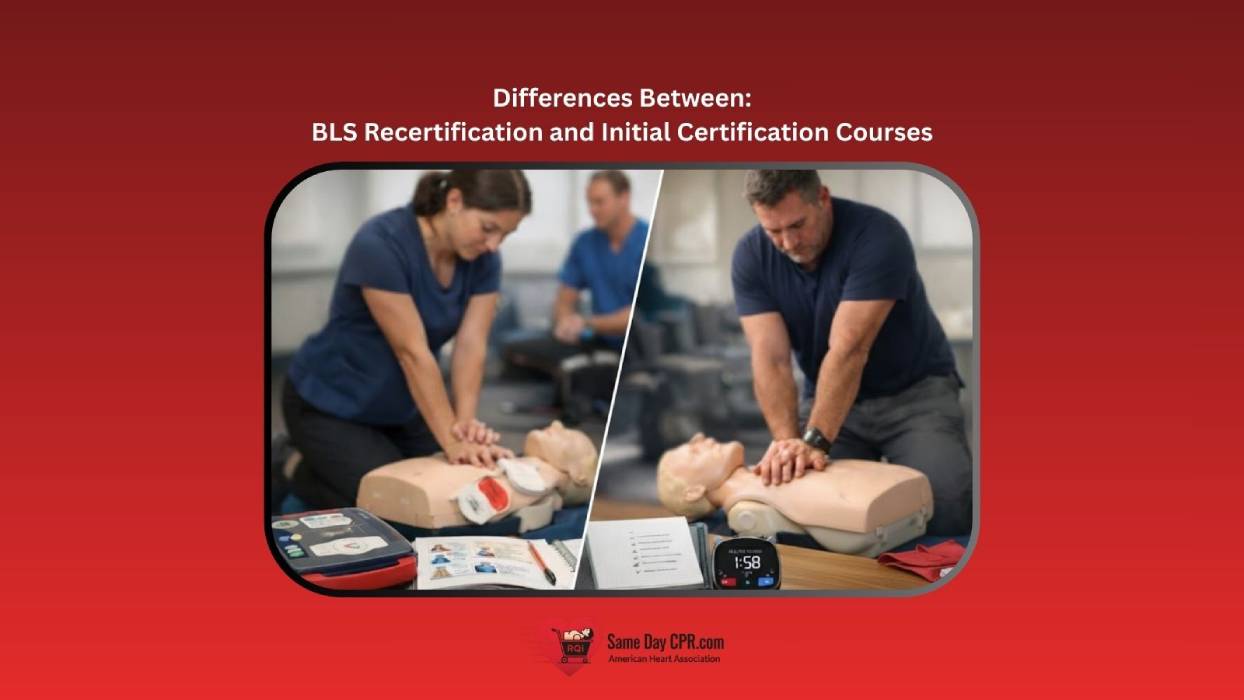
Imagine this: your manager asks you to update your credentials, or you’re applying for a new job. You check your wallet and notice your BLS card expired last month. Do you take the full initial course again, or just the shorter recertification? Knowing the differences helps you choose the right class and stay prepared to save lives.
This guide breaks down the key differences between BLS initial and recertification courses, including who should take them, what’s covered, duration, and cost.
What is BLS Certification?
Before we compare the classes, let us define the subject. BLS stands for Basic Life Support. Healthcare providers use these skills to save lives. It involves more than just CPR (Cardiopulmonary Resuscitation). BLS covers rescue breathing, how to use an automated external defibrillator (AED), and how to help someone who is choking.
Doctors, nurses, dentists, and emergency medical technicians need this certification. Many hospital jobs require it. The American Heart Association (AHA) creates the guidelines for these courses. They set the standard for what students must learn.
The Initial BLS Course Explained
The initial BLS course is for people who have never taken BLS before. It is also for people whose certification has expired for a long time. Think of this class as the foundation. You start from zero and build your skills up.
1. Who Should Take This Class?
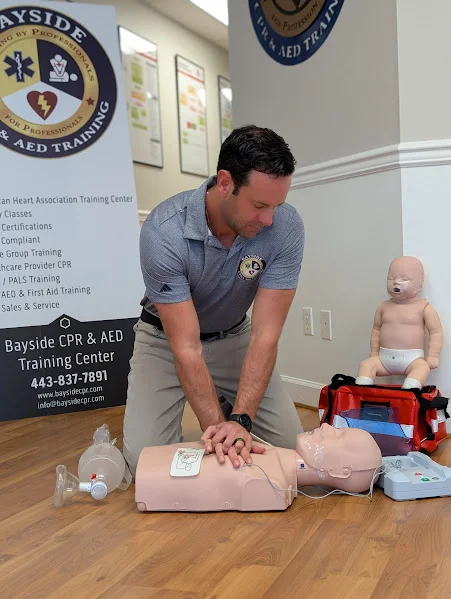
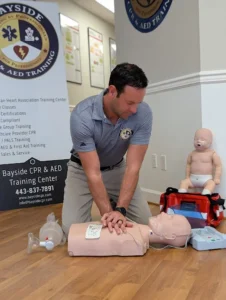
The initial BLS certification course is prepared for those starting a career in healthcare or emergency response, as well as for anyone who has never received BLS training. It is also required for individuals whose certification has expired and requires full renewal. This hands-on course provides practical experience with manikins and equipment, ensuring participants are well-prepared to handle real-life emergencies.
2. Course Content & Requirements
The initial BLS course teaches essential life-saving skills, such as:
- CPR for adults, children, and infants.
- Use of an Automated External Defibrillator (AED).
- Choking relief techniques (Heimlich maneuver).
- Basic airway management.
- Identifying and responding to cardiac arrest.
3. Course Duration
The initial BLS course typically takes 3-4 hours, depending on class size and the pace of instruction. Upon completion, participants are required to complete both the online theory session and a skills evaluation to earn their certification. The skills test assesses the ability to perform CPR and other life-saving procedures, while the theory verifies understanding of essential BLS concepts.
The BLS Recertification Course Explained
The recertification course goes by many names. You might see it called a renewal class or a BLS update. The goal is different here. This class is not for learning from scratch. It is for polishing skills you already possess.
1. Who Should Take This Class?
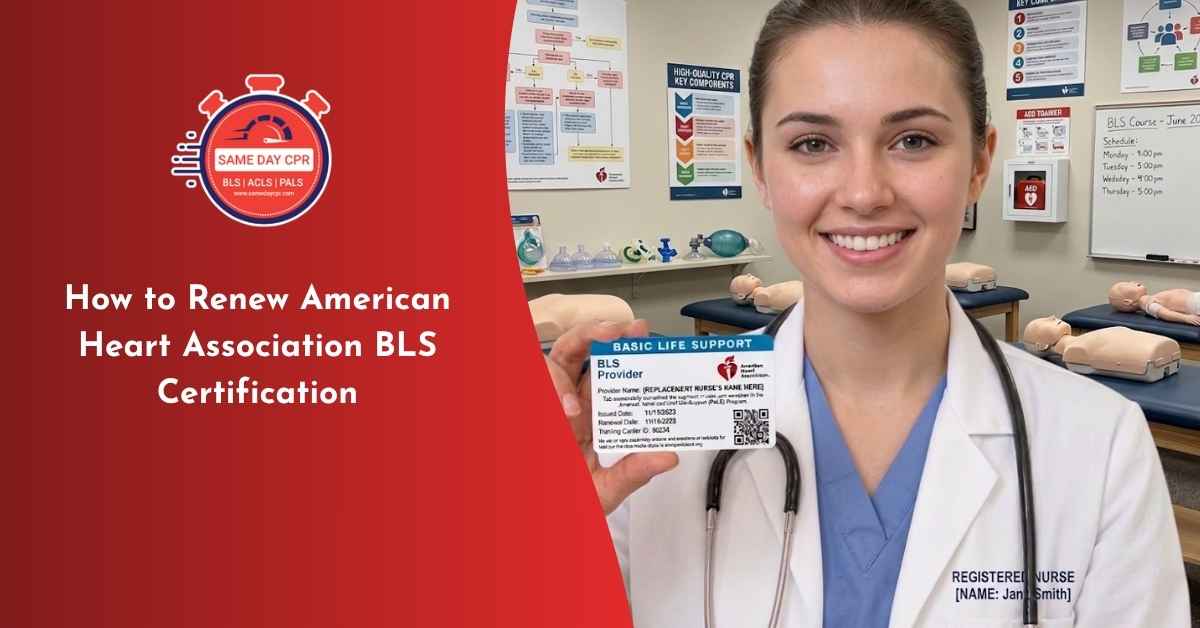
Recertification is necessary for individuals whose initial BLS certification has expired or is nearing expiration. Since most BLS certifications are valid for two years, staying current with skills and techniques is essential. Maintaining an up-to-date certification is crucial for those working in healthcare and emergency response, as many employers require it.
2. Course Content & Requirements
Although recertification includes much of the same material as the initial course, it is shorter and emphasizes refreshing existing skills rather than learning them for the first time. Participants review key life-saving techniques and practice them before completing the skills test.
3. Course Duration
Recertification courses last 1-2 hours, shorter than the initial certification. The recertification process is streamlined, but participants still need to demonstrate proficiency in CPR, AED use, and other critical skills. After completing the online course, participants take a skills test to receive their renewed certification.
Key Differences at a Glance
Whether you are starting BLS for the first time or keeping your skills current, choosing the right course matters. This table shows the main differences between initial and recertification courses.
| Feature | Initial Course | Recertification Course |
|---|---|---|
| Purpose | Learn skills from scratch | Refresh and update existing skills |
| Duration | Approximately 3–4 hours | Approximately 1–2 hours |
| Depth | Comprehensive (science, anatomy, legal issues) | Core skills only |
| Cost | Higher | Lower |
| Skills Test | Manikin at CPR Verification Station | Manikin at CPR Verification Station |
Steps to Enroll in a BLS Course
Signing up for a BLS certification course is quick and easy, getting you one step closer to saving lives. Just follow these three simple steps:
Step 1: Choose Your Course, Location, and Time: Select the BLS certification that fits your needs and pick a convenient time and location for your training.
Step 2: Complete the Online Self-Paced Training: Finish the online portion at your own pace, anytime and anywhere that works for you.
Step 3: Demonstrate Hands-On Skills In Person: Attend the in-person session to practice and demonstrate your BLS skills using an AHA voice-assisted manikin, ensuring you’re prepared for real-life emergencies.
Save Lives with Confidence: Get BLS Certified
In summary, BLS certification is a vital tool for healthcare professionals. Whether you take the initial course or the recertification course, the result is the same. You gain the skills and confidence to save a life. Do not let the process stress you out. We want you to pass, and want to send competent lifesavers out into the world. Study a little before you come, dress comfortably, and participate fully. Keep your certification current. It saves you time and money in the long run. More importantly, it ensures you are always ready to help when an emergency strikes. Sign up for your class today and take the first step toward being a hero.
At Same Day CPR we offer BLS certification and recertification that prepare you with the confidence to perform lifesaving skills. We also provide other courses, including ACLS, PALS, CPR, and First Aid, prepared to fit your schedule and needs. Start with the included online course, then complete a brief hands-on session at one of our 100+ convenient locations. You’ll leave with your official AHA-standard certification card, ready to use immediately. Enroll today and gain the skills and confidence to save a life.