Preparing for an ACLS (Advanced Cardiovascular Life Support) certification course can feel overwhelming, especially if it has been a while since you reviewed cardiac rhythms, medications, or emergency algorithms. The good news is that you do not need to memorize everything at once. Reviewing high-quality CPR, ECG rhythm recognition, airway management, ACLS medications, electrical therapy, algorithms, and team dynamics can help you feel more prepared for the course and skills testing.
ACLS builds on BLS (Basic Life Support), so refreshing your BLS knowledge before class is also helpful. The following topics are among the most important areas to review before taking an ACLS certification course.
ACLS Core Concepts to Review Before Class
Before starting your ACLS course, review the fundamentals that support rapid assessment and treatment of critically ill patients.
Focus on:
- The purpose of ACLS in managing life-threatening cardiovascular and respiratory emergencies
- Rapid recognition of cardiac arrest and unstable patients
- High-quality CPR and minimizing interruptions in chest compressions
- Basic ECG rhythm recognition
- Common ACLS medications and their clinical roles
- Defibrillation, synchronized cardioversion, and pacing
- Effective team dynamics and communication
- The relationship between BLS and ACLS
Understanding these concepts makes it easier to follow ACLS algorithms and participate effectively in hands-on scenarios.
High-Quality CPR
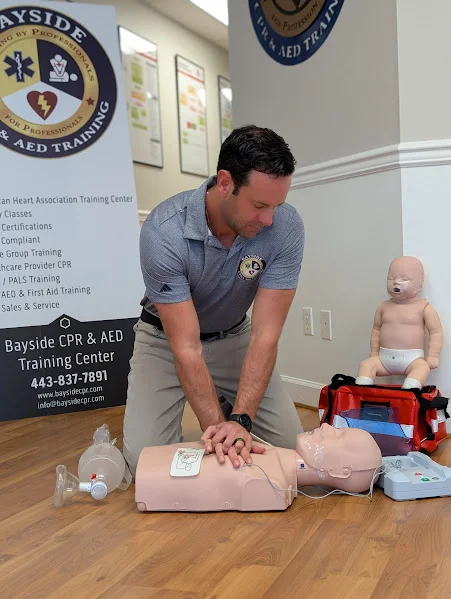
High-quality CPR (Cardiopulmonary Resuscitation), is one of the most important foundations of ACLS. Before class, review the essential components of effective adult CPR.
- Chest Compressions: Review the recommended compression rate, appropriate depth, complete chest recoil, and the importance of minimizing interruptions.
- Minimize Interruptions: Interruptions in compressions should be kept as short as possible. Team members should coordinate tasks such as rhythm checks, ventilation, and defibrillation so that CPR can resume quickly.
- Monitor CPR Quality: When available, feedback devices and other monitoring methods can help assess CPR quality. Pay attention to compression performance, chest recoil, ventilation, and patient response.
A strong understanding of CPR makes it easier to perform effectively during ACLS scenarios and skills testing.
Airway and Ventilation Management
Airway and ventilation management are important parts of resuscitation. Review the basic principles before your ACLS course, including:
- Basic airway-opening techniques
- Bag-mask ventilation
- Supraglottic airway devices
- Endotracheal intubation concepts
- Confirmation of advanced airway placement
- Appropriate ventilation during CPR
- The role of capnography when available
You should also understand that ventilation requirements can change depending on whether an advanced airway is in place. Your ACLS course will provide the specific techniques and protocols you need to demonstrate.
ECG Rhythm Recognition You Should Know Before ACLS
ECG rhythm recognition is a major part of ACLS. You should be comfortable identifying several common rhythms and understanding whether they are associated with a pulse.
- Rhythms to Review
- Normal sinus rhythm
- Ventricular fibrillation (VF)
- Pulseless ventricular tachycardia (pVT)
- Asystole
- Pulseless electrical activity (PEA)
- Bradycardic rhythms
- Tachycardic rhythms
A particularly important distinction is between shockable and non-shockable cardiac arrest rhythms. VF and pulseless VT are shockable, while asystole and PEA are treated as non-shockable rhythms.
Practice identifying rhythms from ECG strips before class. The goal is to improve both recognition and decision-making speed.
ACLS Medications
Medication knowledge is another important area to study before ACLS certification. Rather than trying to memorize medication lists in isolation, understand which medications are associated with particular clinical situations.
Common ACLS medications to review include:
- Epinephrine
- Amiodarone
- Adenosine
- Atropine
- Magnesium sulfate
Review each medication’s general purpose, indications, contraindications where applicable, and role within the relevant ACLS algorithm. Pay close attention to medication timing and administration routes.
Because medication doses and protocols can change and may depend on the clinical situation, always use the current course materials and official guidelines for exact dosing information.
Defibrillation and Electrical Therapy
Understanding electrical therapies is essential before taking ACLS. Review the differences between defibrillation, synchronized cardioversion, and pacing.
Defibrillation
Defibrillation is used for certain life-threatening shockable rhythms, particularly ventricular fibrillation and pulseless ventricular tachycardia.
Review:
- When defibrillation is indicated
- Safe use of the defibrillator
- Appropriate energy selection according to the equipment and current guidelines
- The importance of ensuring everyone is clear before shock delivery
Synchronized Cardioversion
Synchronized cardioversion is used for certain tachyarrhythmias with a pulse, particularly when the patient is unstable. The key difference from defibrillation is that cardioversion synchronizes the shock with the patient’s cardiac rhythm. Understanding cardioversion vs. defibrillation can help clarify when each electrical therapy is appropriate during cardiac emergencies.
Pacing
Pacing can be used when clinically significant bradycardia does not respond adequately to initial treatment. Review the basic purpose of transcutaneous pacing and understand how it fits into the bradycardia algorithm.
ACLS Algorithms to Study Before Certification
ACLS algorithms provide structured, evidence-based approaches to managing life-threatening cardiovascular emergencies. Reviewing the major algorithms before certification can help you understand the sequence of assessment, intervention, reassessment, and escalation used during ACLS simulations and clinical scenarios.
Adult Cardiac Arrest Algorithm (VF/pVT/Asystole/PEA)
Review the ACLS approach to adult cardiac arrest, including immediate high-quality CPR, rhythm assessment, defibrillation when indicated, medication administration, and ongoing reassessment.
A key concept is distinguishing shockable rhythms (ventricular fibrillation and pulseless ventricular tachycardia) from non-shockable rhythms (asystole and pulseless electrical activity) and understanding how management differs between these rhythm categories.
Adult Bradycardia With a Pulse Algorithm
The bradycardia algorithm addresses patients with a slow heart rate when the bradycardia is clinically significant, particularly when symptoms or signs of poor perfusion are present.
Review the initial assessment, monitoring, supportive measures, medication treatment, and indications for transcutaneous pacing and additional interventions when bradycardia persists or the patient remains unstable.
ACLS Suspected Stroke Algorithm
The suspected stroke algorithm emphasizes rapid recognition, assessment, and coordination of care because treatment decisions are highly time-sensitive.
Review recognition of possible stroke symptoms, immediate assessment, blood glucose evaluation when appropriate, determination of the time the patient was last known well, and rapid transport or referral for further neurological evaluation and imaging.
Adult Tachyarrhythmia With a Pulse Algorithm
The tachyarrhythmia algorithm focuses on patients with a rapid heart rate and a palpable pulse.
Review how to assess the patient for hemodynamic instability, determine whether the tachyarrhythmia is causing the instability, and identify how treatment changes according to the patient’s clinical status. Become familiar with the role of synchronized cardioversion, vagal maneuvers, medications, and expert consultation when indicated.
Acute Coronary Syndrome (ACS)
Review the initial assessment and management principles for patients with suspected acute coronary syndrome.
Key areas include recognizing possible ischemic symptoms, obtaining and interpreting an ECG promptly, monitoring the patient, identifying patients at risk for acute myocardial infarction, and facilitating timely evaluation and reperfusion or other appropriate treatment when indicated.
Adult Post-Cardiac Arrest Care Algorithm
After return of spontaneous circulation (ROSC), priorities shift from cardiac arrest resuscitation to stabilization, identification of the underlying cause, and prevention of secondary injury.
Review the principles of:
- Airway and ventilation management
- Oxygenation and appropriate oxygen titration
- Blood pressure and circulation support
- Identification and treatment of the underlying cause
- Temperature management when indicated
- Neurological assessment and ongoing monitoring
- Cardiovascular evaluation and appropriate post-arrest care
Cardiac Arrest in Pregnancy Algorithm
Cardiac arrest during pregnancy requires modifications to standard resuscitation based on the patient’s physiology and gestational considerations.
Review the ACLS approach to maternal cardiac arrest, including high-quality CPR, defibrillation when indicated, appropriate positioning and uterine displacement considerations, airway and ventilation management, identification of reversible causes, and preparation for emergency delivery when appropriate.
Always study the current ACLS study guide, course materials, and applicable resuscitation guidelines, as recommendations, terminology, and treatment pathways may be updated.
Team Dynamics and Communication in ACLS
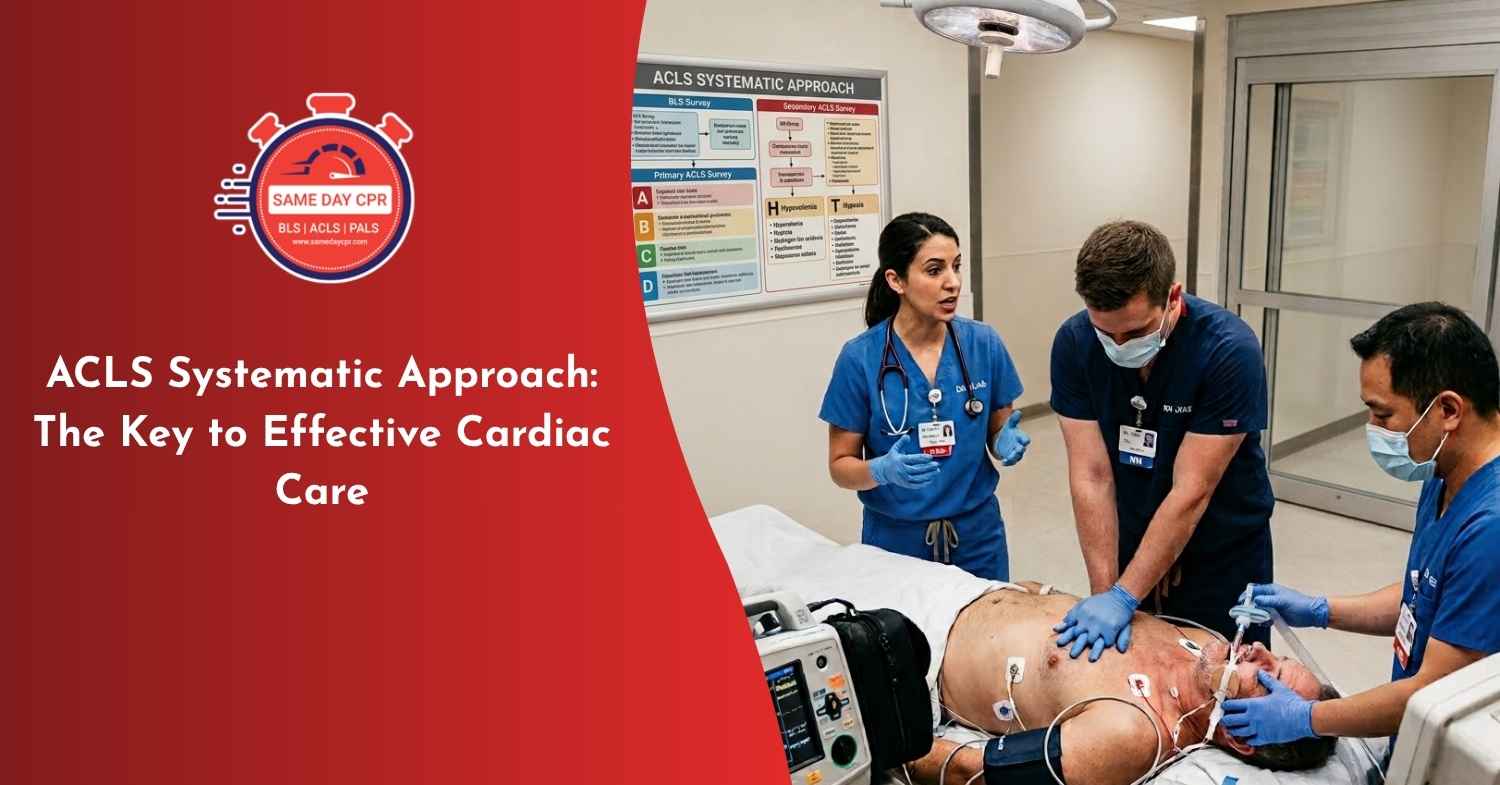
ACLS is not only about knowing algorithms. Effective teamwork is essential during a cardiac emergency. Understanding the resuscitation triangle roles in ACLS helps ensure that each team member knows their responsibilities, communicates clearly, and works efficiently during a high-stakes resuscitation.
- Defined Roles: Each team member should understand their responsibility, such as performing compressions, managing the airway, administering medications, operating the defibrillator, or documenting events.
- Closed-Loop Communication: Team members should communicate clearly and confirm important instructions. This reduces misunderstandings and helps ensure that critical tasks are completed correctly.
- Clear and Direct Communication: During a resuscitation, communication should be concise and organized. Avoid unnecessary conversations that can distract from patient care.
- Mutual Respect: Team members should be able to identify concerns, provide appropriate corrections, and ask questions without disrupting the overall response.
- Shared Understanding: Everyone should understand the patient’s condition, the current rhythm, the treatment plan, and what needs to happen next. Practicing these communication skills can make ACLS simulations more organized and effective.
ACLS Exam Preparation Tips
Knowing what to expect can make ACLS preparation less stressful. Depending on the course provider and current certification requirements, your ACLS course may include knowledge assessment and skills or scenario-based evaluation.
- Review ACLS Algorithms: Study the major algorithms repeatedly instead of trying to memorize them during one long session. This helps guide clinical decisions during cardiac arrest and other life-threatening cardiovascular emergencies.
- Practice ECG Rhythms: Use ECG practice strips to improve your ability to recognize common rhythms quickly.
- Review Medications: Learn what the major ACLS medications are used for and where they fit within the relevant algorithms.
- Practice Megacode Scenarios: Scenario practice helps you combine rhythm recognition, CPR, medications, electrical therapy, and team communication.
- Take an ACLS Practice Test: An ACLS practice test can help identify areas where you need additional review before starting your online coursework or practicing hands-on skills.
Common mistakes to avoid include:
- Missing important assessment steps
- Confusing shockable and non-shockable rhythms
- Forgetting to resume CPR promptly
- Misunderstanding medication indications
- Poor communication during team scenarios
- Focusing on individual tasks instead of the overall resuscitation sequence
Key Takeaways Before Your ACLS Course
In summary, you do not need to master every ACLS concept in one study session. Start with the fundamentals: high-quality CPR, ECG rhythm recognition, airway and ventilation, medications, electrical therapy, ACLS algorithms, and team communication. Practice applying these concepts rather than simply memorizing information. Working through rhythm examples and simulated scenarios can help you develop the confidence and decision-making skills needed during ACLS training. When preparing for certification, always use the most current materials provided by your course provider and follow current resuscitation guidelines.
Did you understand what you need to know before taking an ACLS certification course? Now wondering where to enroll? No worries, we’ve got you covered! At Same Day CPR, we offer AHA ACLS training that includes online coursework followed by an in-person skills session at CPR Verification Station. We also offer BLS, PALS, CPR, and First Aid certification classes. Complete your training requirements, practice your skills, and work toward earning your official AHA certification card!