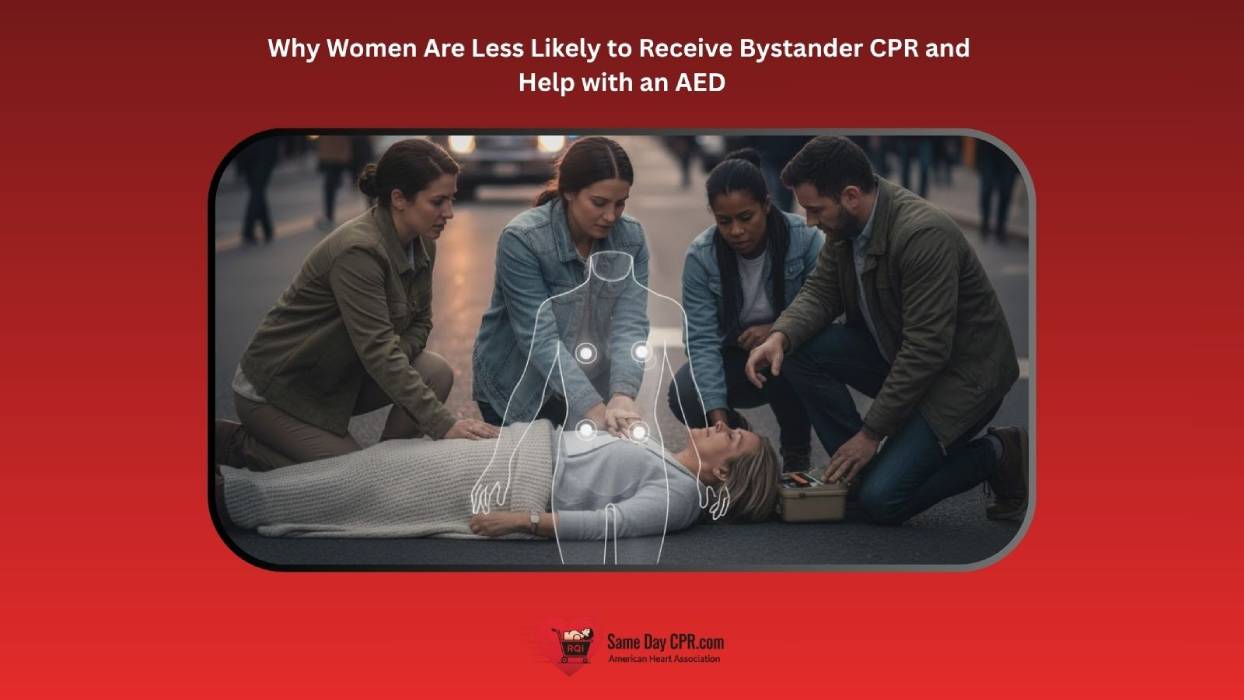
When someone experiences sudden cardiac arrest, every moment matters. Immediate cardiopulmonary resuscitation (CPR) can help maintain blood flow to the brain and other vital organs until an automated external defibrillator (AED) or emergency medical services can provide further treatment. The American Heart Association (AHA) says immediate CPR can double or triple a person’s chance of survival.
Yet research shows a persistent disparity in bystander CPR for women. In a study cited by the AHA, 39% of women experiencing cardiac arrest in public received bystander CPR, compared with 45% of men. Men’s odds of survival were also 23% higher than women’s in that study.
Why does this gap exist?
The reasons are complex. Fear of inappropriate touching, uncertainty about how to perform CPR on a woman, misconceptions about cardiac risk, and gaps in training can all influence whether a bystander intervenes.
Understanding these barriers can help communities encourage faster, more confident CPR and AED use for everyone.
Why Are Women Less Likely to Receive Bystander CPR?
Women can experience cardiac arrest just as men can, but research has found differences in whether bystanders intervene, particularly when cardiac arrest occurs in public. Several factors may contribute to this disparity.
Fear of Inappropriate Contact
One commonly reported barrier is discomfort about touching a woman’s chest during CPR.
Effective CPR requires firm chest compressions in the center of the chest. Some bystanders may worry that physical contact could be viewed as inappropriate, particularly when the victim is a woman.
The AHA has specifically identified concerns about exposing a woman’s chest and fears of inappropriate touching or sexual-assault accusations as potential barriers to bystander CPR.
In a cardiac arrest, however, the priority is to begin lifesaving care immediately.
Fear of Legal Consequences
Some people hesitate to perform CPR because they worry they could face legal consequences if they injure the person or do something incorrectly.
Good Samaritan protections vary by jurisdiction, so people should understand the laws that apply where they live. More importantly, CPR training can help bystanders understand what appropriate emergency assistance looks like and make them more confident about taking action.
Gender Stereotypes and Misconceptions
Another barrier is the mistaken belief that women are less likely to experience serious cardiac problems.
Cardiac arrest can happen to anyone. A person who suddenly becomes unresponsive and is not breathing normally needs immediate emergency assistance regardless of sex or gender.
The AHA encourages greater awareness of cardiac arrest in women and specifically recommends education and training that address gender-related barriers to bystander CPR.
Fear of Causing Injury
Some bystanders worry that chest compressions could cause broken ribs or other injuries.
In an individual experiencing cardiac arrest, however, delaying effective CPR can be far more dangerous than causing an injury during resuscitation. If you’re concerned about this risk, learn more about does CPR break ribs? what you need to know before an emergency occurs. The goal is to provide effective chest compressions while following dispatcher or CPR-training instructions.
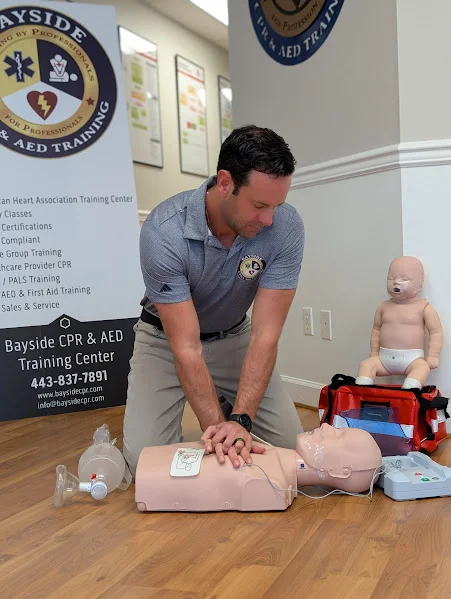
The AHA recommends pushing hard and fast in the center of the chest at a rate of 100 to 120 compressions per minute for adult cardiac arrest.
Lack of Confidence With CPR on Women
A person who has never practiced CPR on a body type that resembles the victim may feel uncertain when an emergency occurs.
Training that represents women more effectively can help reduce this uncertainty. The AHA has identified gender-related barriers as an issue that CPR training should address.
The fundamental principles of adult CPR remain the same: recognize cardiac arrest, activate emergency services, begin chest compressions, and use an AED (Automated External Defibrillator) as soon as one is available.
What Are the Consequences of Delayed CPR?
Lower Chances of Survival
Delaying CPR means the heart and brain may receive inadequate blood flow for longer. Immediate bystander CPR can substantially improve survival, which is why rapid intervention is a central part of the chain of survival.
Greater Risk of Brain Injury
Cardiac arrest interrupts circulation to the brain. Prolonged interruption of blood flow can contribute to serious neurological injury.
Effective CPR helps maintain circulation until the heart’s rhythm can potentially be restored and professional medical care is available.
A Wider Public Health Problem
The gender gap in bystander response is part of a broader challenge in cardiac-arrest care.
The AHA has identified unequal access to CPR and AED training and unequal provision of bystander CPR and AED use as contributors to disparities in cardiac-arrest outcomes.
Closing these gaps requires more than encouraging individuals to learn CPR. Communities also need accessible training, public AEDs, effective emergency-dispatch systems, and education that addresses common barriers to intervention.
How Can We Close the CPR Gap for Women?
Increase Public Awareness
Education can help people recognize that cardiac arrest is an emergency that requires immediate action regardless of whether the victim is a man or woman.
Public campaigns should:
- Explain why bystander CPR matters.
- Address common fears about performing CPR on women.
- Teach people where to find and how to use an AED.
- Encourage people to call emergency medical services (EMS) at 911 and follow dispatcher instructions.
- Normalize lifesaving intervention in emergencies.
Improve CPR Training
CPR education should prepare people to respond confidently to different victims and circumstances.
Training programs can help by:
- Including women in CPR demonstrations and educational materials.
- Addressing concerns about touching and exposing the chest.
- Providing realistic CPR and AED scenarios.
- Teaching proper AED pad placement.
- Explaining how to respond quickly without allowing fear to delay lifesaving care.
Encourage People to Act
One of the most important lessons in CPR training is that doing something is better than standing by.
If an adult suddenly collapses and is unresponsive and not breathing normally, call emergency services, start CPR, and get an AED.
In 2024, preliminary research presented by the AHA found that dispatcher-assisted CPR substantially increased the likelihood that bystanders would provide CPR to people experiencing cardiac arrest, including women. This reinforces the importance of calling emergency services and following dispatcher instructions.
Closing Thoughts: Everyone Deserves Immediate CPR and AED Assistance
In summary, women deserve the same rapid, lifesaving response as men when cardiac arrest occurs. Research shows that women are less likely to receive bystander CPR in public, and several social and psychological barriers may contribute to that disparity. The solution starts with education. Learning CPR and AED use can make people more confident about responding when someone collapses. Understanding common concerns about helping women can also make it easier to act instead of hesitating.
At Same Day CPR, getting certified is quick and stress-free. We offer AHA CPR, First Aid, BLS, ACLS, and PALS courses designed to fit your schedule. Complete the online portion at your own pace, then finish with a short hands-on session at one of our 100+ nearby locations. Your American Heart Association certification card is issued immediately. Choose a location near you and take the first step toward saving lives today.