
Cardiac emergencies can change within seconds. Healthcare professionals must recognize deterioration quickly, assess the patient accurately, and choose the right intervention without unnecessary delay. Advanced Cardiovascular Life Support (ACLS) provides a structured framework for managing cardiac arrest and other life-threatening cardiovascular emergencies.
A systematic ACLS approach follows a continuous cycle of assessment, intervention, reassessment, and adjustment. Rather than relying on a single intervention or following an algorithm mechanically, clinicians assess the patient’s condition, identify the appropriate treatment pathway, intervene according to current ACLS guidance, and then reassess the patient’s response. This structured process helps healthcare professionals adapt care as the patient’s rhythm, clinical condition, and response to treatment change.
A systematic approach also helps clinicians stay focused when several critical tasks happen at once. It guides the team through patient assessment, high-quality CPR, rhythm recognition, defibrillation when indicated, medication therapy, airway and ventilation management, identification of reversible causes, and continuous reassessment. It also gives team members a shared process for communicating and coordinating care.
The goal is not to follow a checklist mechanically. Clinicians must use the appropriate ACLS algorithm while applying clinical judgment and adapting treatment to the patient’s rhythm, clinical condition, response to interventions, and suspected cause. Current AHA guidance emphasizes this combination of structured algorithms, high-quality resuscitation, clinical assessment, and ongoing reassessment.
What Is the ACLS Systematic Approach?
The ACLS systematic approach is a structured method for assessing and treating patients with cardiac arrest or other life-threatening cardiovascular emergencies. It helps healthcare professionals identify immediate threats, select the appropriate treatment pathway, address potential causes, and evaluate the patient’s response to treatment.
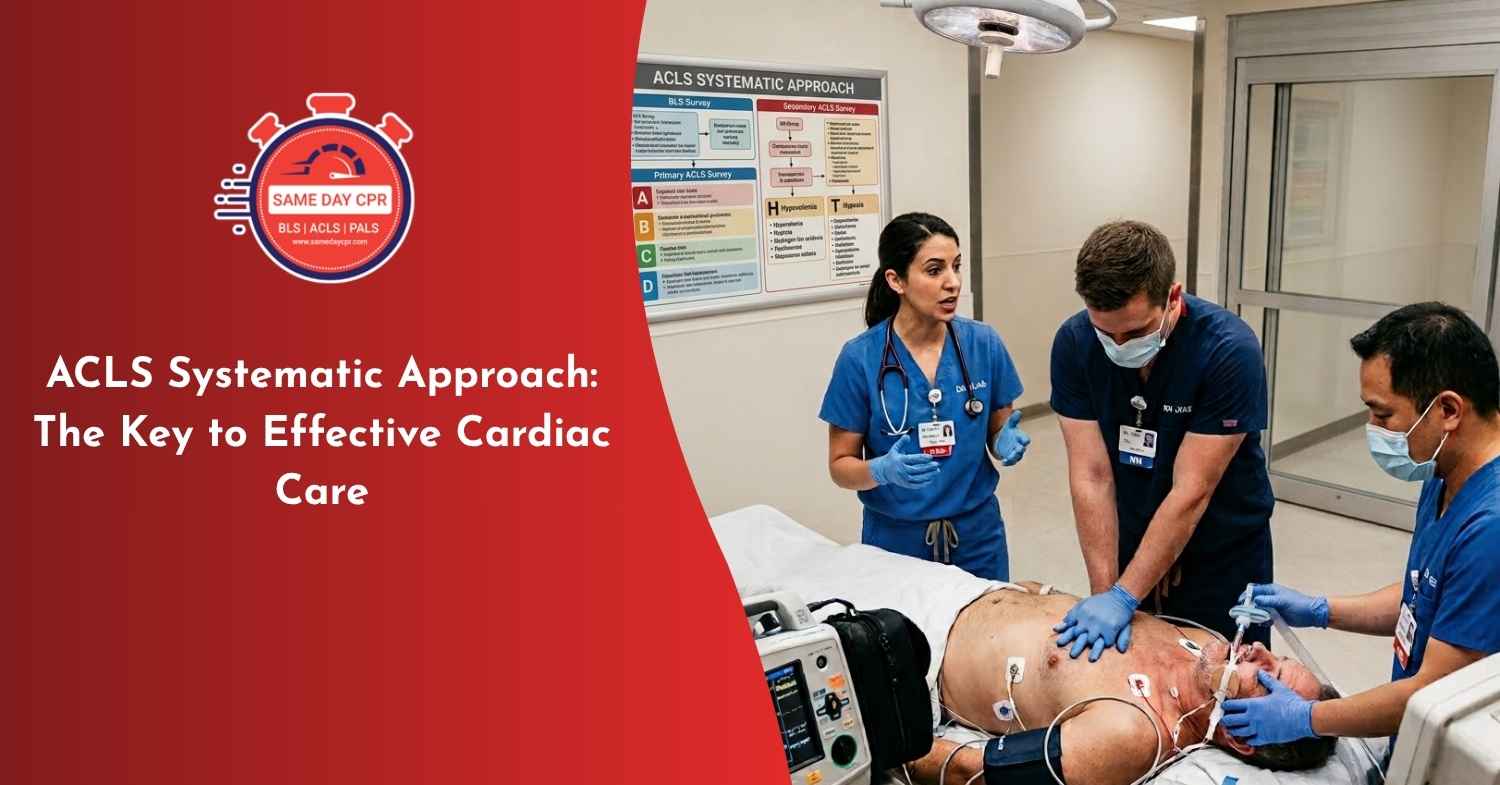
The approach is dynamic rather than strictly linear. Team members may perform several tasks simultaneously while the team leader maintains an overall assessment of the patient’s condition. For example, one clinician may provide chest compressions while another prepares the defibrillator, another establishes vascular access, and the team leader evaluates the rhythm and coordinates treatment.
At each stage, clinicians apply the appropriate ACLS algorithm while using clinical judgment to account for the patient’s rhythm, symptoms, physical findings, response to treatment, and suspected underlying cause.
Start With Immediate Priorities
When a patient becomes unresponsive, the team should rapidly recognize possible cardiac arrest, activate the emergency response system, assess breathing and pulse, and begin resuscitation when indicated. Current AHA adult Basic Life Support (BLS) guidance emphasizes early recognition, activation of the emergency response system, high-quality CPR, and prompt AED use.
Once cardiac arrest is suspected, the team should begin effective CPR and apply an AED or manual defibrillator as soon as possible. Rhythm analysis then determines whether the patient requires the shockable- or non-shockable-rhythm pathway.
The immediate priority is to establish effective resuscitation while the team gathers information needed to guide subsequent treatment.
Use ACLS Algorithms as Decision-Support Tools
ACLS algorithms provide standardized pathways for cardiac arrest, tachycardia with a pulse, bradycardia with a pulse, and post-cardiac-arrest care. They help clinicians organize time-sensitive decisions involving CPR, defibrillation, medications, airway management, and other interventions.
Algorithms should support—not replace—clinical assessment. Clinicians must interpret the rhythm in the context of the patient’s overall condition, recognize changes in stability, consider possible causes, and select interventions appropriate to the clinical situation.
This approach allows teams to use standardized guidance while still adapting treatment when the patient’s condition changes.
The Initial Assessment: BLS and Immediate Priorities
The initial assessment establishes the foundation for advanced care. When an adult becomes unresponsive, healthcare professionals should rapidly determine whether the patient has normal breathing and a pulse and activate the emergency response system as appropriate.
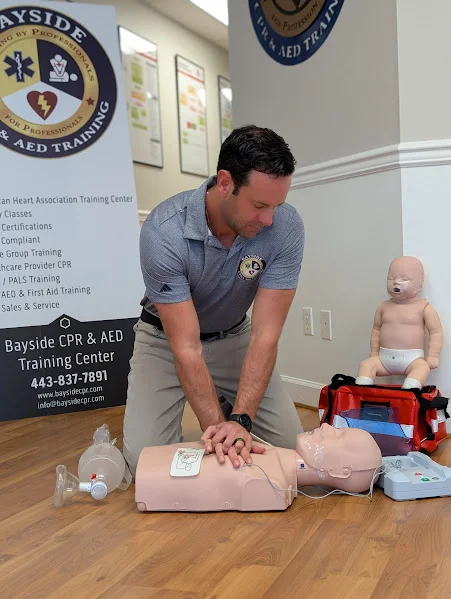
If cardiac arrest is suspected, begin high-quality CPR without unnecessary delay and apply an AED or manual defibrillator as soon as possible. CPR performance should include appropriate compression rate and depth, complete chest recoil, minimal interruptions, avoidance of excessive ventilation, and regular compressor changes to maintain effectiveness.
The team should then determine whether the rhythm is shockable. Ventricular fibrillation (VF) and pulseless ventricular tachycardia (pVT) are treated with defibrillation when indicated. Asystole and pulseless electrical activity (PEA) are managed with CPR, appropriate medications, and investigation of reversible causes.
The initial assessment therefore establishes the immediate treatment pathway while allowing the team to gather information needed for ongoing management.
The Primary Assessment: ABCDE Approach
The ABCDE approach provides a structured way to identify life-threatening problems, particularly when a patient has not yet progressed to cardiac arrest or when the team evaluates an unstable patient.
A (Airway): Assess whether the airway remains open. Look for obstruction or other problems that interfere with ventilation.
B (Breathing): Evaluate respiratory rate, effort, chest movement, breath sounds, and oxygenation. Provide appropriate oxygen or ventilatory support when clinically indicated.
C (Circulation): Assess the pulse, blood pressure, perfusion, and cardiac rhythm. Establish IV or IO access when needed and continue appropriate cardiac monitoring.
D (Disability): Assess consciousness and neurological status. Consider hypoxia, poor perfusion, metabolic problems, stroke, and other causes of altered mental status.
E (Exposure): Look for important findings such as bleeding, trauma, infection, allergic reactions, toxin exposure, and temperature abnormalities while maintaining the patient’s privacy and preventing unnecessary heat loss.
Cardiac Rhythm and ECG Assessment
Rhythm recognition determines which ACLS treatment pathway applies. During cardiac arrest, the team classifies the rhythm as shockable or non-shockable.
Shockable rhythms:
- Ventricular fibrillation (VF)
- Pulseless ventricular tachycardia (pVT)
Non-shockable rhythms:
- Asystole
- Pulseless electrical activity (PEA)
For patients with a pulse, clinicians should interpret bradycardia or tachycardia together with blood pressure, mental status, symptoms, perfusion, and overall clinical stability. ECG findings should therefore be interpreted in their clinical context rather than considered in isolation.
The rhythm assessment guides treatment selection, while the patient’s clinical response helps determine whether the chosen intervention should be continued or modified.
Identifying and Treating Reversible Causes
Successful resuscitation requires more than treating the cardiac rhythm. The team should also identify and correct potentially reversible causes of cardiac arrest. The Hs and Ts provide a practical framework for this assessment.
| H’s | T’s |
|---|---|
| Hypovolemia: Reduced circulating volume from bleeding or fluid loss. | Tension Pneumothorax: Trapped pleural air that can impair ventilation and venous return. |
| Hypoxia: Inadequate oxygenation caused by airway or respiratory problems. | Cardiac Tamponade: Pericardial fluid or blood that restricts cardiac filling. |
| Hydrogen ion (acidosis): Severe acidosis associated with hypoperfusion or metabolic and respiratory disorders. | Toxins: Drugs or poisons that can impair cardiovascular, respiratory, or metabolic function. |
| Hypo-/Hyperkalemia: Potassium abnormalities that can produce life-threatening arrhythmias. | Pulmonary Thrombosis: Massive pulmonary embolism that obstructs pulmonary blood flow. |
| Hypothermia: Severe reduction in body temperature that can impair cardiac function and promote arrhythmias. | Coronary Thrombosis: Acute coronary occlusion that can cause myocardial ischemia, arrhythmias, and cardiac arrest. |
The team should use the patient’s history, examination findings, rhythm, treatment response, and available diagnostic information to determine which causes are most likely. When a reversible cause is suspected, treatment should address that cause alongside standard resuscitation measures.
ACLS Treatment Priorities
ACLS treatment integrates several interventions rather than relying on a single measure. The major priorities include effective CPR, timely defibrillation when indicated, appropriate medication therapy, airway and ventilation management, and treatment of reversible causes.
High-Quality CPR
Effective chest compressions help maintain circulation during cardiac arrest. The 2025 AHA adult cardiac-arrest algorithm emphasizes a compression rate of 100–120 per minute, adequate depth, complete recoil, minimal interruptions, avoidance of excessive ventilation, and compressor changes approximately every two minutes or sooner if fatigue develops.
Defibrillation
For VF and pVT, defibrillation should be delivered promptly when indicated. CPR should resume immediately according to the applicable algorithm, without unnecessary delays between rhythm recognition and shock delivery.
Medications
Medication therapy depends on the patient’s rhythm and clinical circumstances. Medications should be administered according to the current ACLS algorithm and applicable clinical protocols rather than relying on memory or outdated dosing information.
Airway and Ventilation
Effective ventilation should be maintained while minimizing interruptions in chest compressions. When an advanced airway is used during cardiac arrest, current AHA guidance recommends continuous chest compressions with ventilation delivered according to the applicable algorithm. Waveform capnography can also provide useful information about ventilation and resuscitation when available.
Reassessment as Part of Ongoing Management
Reassessment should occur at the appropriate points within the applicable ACLS algorithm and whenever the patient’s condition changes. The team evaluates rhythm, circulation, breathing, treatment response, and other relevant clinical findings to determine the next step.
This makes ACLS a dynamic process rather than a one-time sequence of interventions. If the patient’s condition or rhythm changes, the team should transition to the appropriate treatment pathway.
Team Dynamics in ACLS
Successful resuscitation depends on coordinated teamwork as well as individual clinical skills. Team members should communicate clearly, understand their responsibilities, and coordinate interventions under time pressure.
The team leader maintains situational awareness, assigns tasks, prioritizes interventions, and monitors overall progress. Other members may manage the airway, perform compressions, operate the defibrillator, administer medications, or document events.
Closed-loop communication helps confirm that instructions are understood and completed. Team members should also speak up when they identify a safety concern, a change in the patient’s condition, or a need to modify the treatment plan.
Common Challenges in Applying the ACLS Systematic Approach
Even with a structured framework, real-world resuscitation can be difficult because of time pressure, incomplete information, and multiple simultaneous tasks.
Delayed Recognition
Deterioration in breathing, mental status, blood pressure, perfusion, or rhythm may occur before cardiac arrest. Early recognition allows the team to intervene before further deterioration when possible.
Poor Communication
Unclear task assignments can create delays or duplication. Specific responsibilities and closed-loop communication help maintain coordination.
Inadequate CPR
Compression quality may decline because of poor technique, excessive interruptions, inadequate recoil, excessive ventilation, or fatigue. Teams should monitor performance and rotate compressors as needed.
Delayed Defibrillation
When VF or pVT is identified, avoidable delays in preparing and delivering the shock can reduce the effectiveness of resuscitation. Early equipment preparation and clear role assignment can improve response time.
Failure to Address the Underlying Cause
Treating the rhythm without considering why the arrest occurred can limit the effectiveness of resuscitation. The Hs and Ts provide a structured reminder to investigate potentially reversible causes.
Improving ACLS Performance
These challenges can be addressed through regular ACLS training, simulation, algorithm review, effective team communication, and ongoing skills assessment.
Simulation allows healthcare professionals to practice rhythm recognition, CPR, defibrillation, medication administration, airway management, leadership, and communication under realistic conditions.
The goal is not simply to memorize an algorithm. Clinicians should develop the ability to recognize patterns, prioritize threats, coordinate interventions, and adapt treatment to the patient’s changing condition.
Applying the ACLS Systematic Approach in Clinical Practice
ACLS training helps clinicians translate knowledge into coordinated action. Simulation provides opportunities to practice cardiac arrest, bradycardia, tachycardia, rhythm recognition, defibrillation, communication, and leadership in realistic scenarios.
Repeated practice can improve familiarity with equipment and treatment pathways while helping clinicians identify areas where additional training may be needed.
Certification alone does not guarantee clinical readiness. Healthcare professionals should maintain their skills through continuing education, simulation, review of current guidelines, and familiarity with local protocols.
Post-Cardiac Arrest Care After ROSC
Return of spontaneous circulation (ROSC) begins another phase of care. The team must continue supporting the patient while evaluating and treating the cause of the arrest.
Post-cardiac-arrest care includes management of oxygenation and ventilation, circulation and blood pressure, neurological status, temperature, cardiac evaluation, and the underlying cause of arrest. The 2025 AHA guidance also emphasizes avoiding hypotension after ROSC and recommends maintaining a minimum MAP of at least 65 mm Hg in adults, with specific management based on the current guideline and clinical context.
Clinicians should obtain a 12-lead ECG as soon as feasible after ROSC and use appropriate diagnostic testing to identify causes or complications when indicated.
The adult post-cardiac-arrest care therefore extends the systematic ACLS process beyond the initial return of circulation and into stabilization and definitive management.
Quick Summary
Recognize → Assess → Intervene → Analyze Rhythm → Treat → Address Reversible Causes → Reassess → Stabilize After ROSC
Key Principles for Effective Cardiac Emergency Care
In short, the ACLS systematic approach gives healthcare professionals a clear and practical way to manage cardiac emergencies. By recognizing problems early, assessing the patient, starting the right treatment, checking the rhythm, addressing reversible causes, and reassessing the response, teams can provide timely and focused care. Good communication, strong teamwork, and regular practice also help clinicians stay calm and prepared when every second matters. ACLS is not simply about memorizing steps. It is about using clinical judgment, following current guidance, and adapting care as the patient’s condition changes. Ready to strengthen your emergency response skills? Enroll in an ACLS class with Same Day CPR and take the next step toward American Heart Association certification.